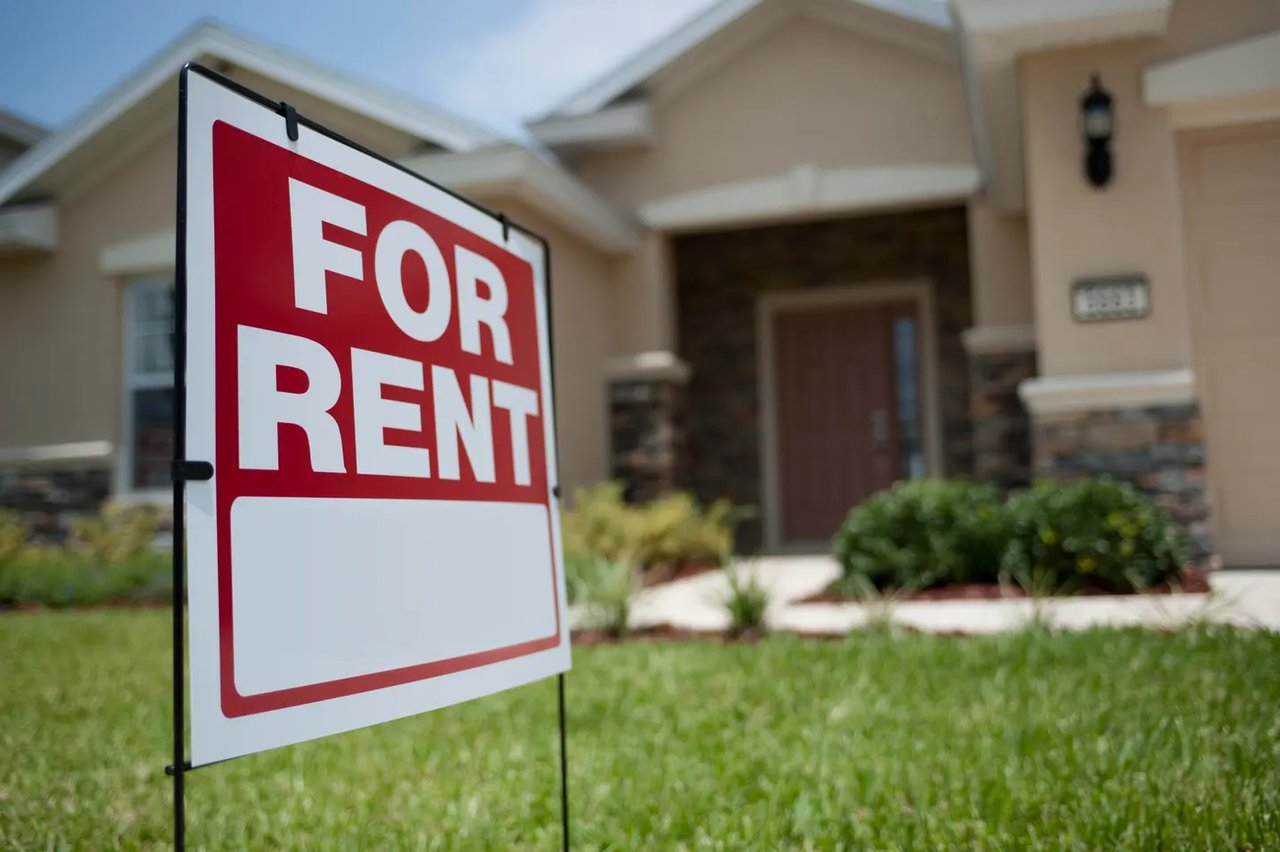
The lack of available homes for sale has created a phenomenon that was not on my 2026 bingo card: a standoff between sellers and buyers. When sellers aren’t offered their desired price, some are opting to rent their homes. According to Kara Ng, senior economist at Zillow, 2.3% of the homes currently listed for rent on the company’s website used to be listed for sale. This is the highest percentage since November, 2022 – and she tells me it’s the second-largest percentage on record of previously-listed homes now listed for rent.
The 10 metro areas with the highest share of accidental landlords are as follows:
Denver: 4.9%
Houston: 4.2%
Austin: 4.1%
San Antonio: 3.9%
Portland: 3.7%
Tampa: 3.7%
Miami: 3.5%
Dallas: 3.4%
Jacksonville: 3.3%
Nashville: 3.2%
You may have noticed that a whopping 7 of the 10 metro areas are in Texas (4 metro areas) and Florida (3 metro areas). Ng explains that a lot of new homes have been built in these states, helping to rebalance the market. “That added inventory has created more options for buyers, and more competition for sellers, who may have to cut their list price in order to sell.” And, she says sellers in those areas are more likely to choose to rent instead.
Contributing Factors
As recently as December, 2025, Pew Research Center estimates put the U.S. housing shortage between 4 million to 7 million homes. This gives sellers the upper hand, but as India Headley, state managing broker at Epique Realty in Connecticut, told me when I interviewed her for my article on All of the Terrible Homebuying And Selling Advice to Leave in 2025, sellers shouldn’t assume that there’s a buyer who will pay any price because they see the charm in your home. She explained that when a home sits on the market collecting days, it begins to look less, not more, desirable.
Some sellers may find it more advantageous to just pull the listing and rent the property than let it languish on the market.
According to Ricky Carruth, chief housing analyst at RLTYco, there's no such thing as an accidental landlord. “These are just sellers who didn't get their asking price and decided to make someone pay rent instead.” He says the problem (if we’re calling it a problem) is that homeowners are in the strongest financial position in U.S. history. “Record low delinquencies, massive equity – most are sitting on 3% to 4% mortgages.” And if they’re not in trouble – which Carruth defines as being underwater or behind in payments – Carruth says they don’t have to sell.
Nikki Beauchamp, associate broker at Sotheby's International Realty in New York, agrees, and says there are several reasons homeowners may consider renting to be a more attractive option. “As they evaluate the cost of ownership/carry – especially if they own the house outright or have a very low interest rate – renting may be a viable option.” Beauchamp says it’s also important to consider the rental market in that particular area, and renting can provide an opportunity to cover costs or be cash flow positive.
“Unless an owner is at risk of foreclosure, or has a major tax liability – I would posit these are two of the most frequent categories of distressed properties other than properties with structural issues – there may be more openness to holding on,” she says.
Inventory Plays A Role
Market conditions for selling/buying and renting can vary by location. Carruth says there’s a spike in would-be sellers renting their homes in Texas and Florida because those markets overbuilt during COVID and now inventory is piling up.
“It’s the same with Denver, Portland, and Nashville: those are pandemic boom markets that corrected hard, and now sellers are playing the long game instead of taking a loss,” he explains.
Lizz Sansone is managing partner of The Agency Houston-Sugarland. Houston ranks 2nd on the list of accidental landlords. Sansone tells me that she’s seeing quite a bit of sellers-turned landlords because their city has more inventory than any other real estate market in the country. “The combination of resale homes plus new construction homes has created an environment where days on the market are longer than they have been in recent years.” And she notes that sellers are willing to lease their home than take price reductions. “Most homeowners are doing well from an equity standpoint in Houston, so unless they feel they must sell, they’d rather be a landlord than diminish the equity they’ve built.”
Tariffs And Job Cuts Take A Toll
Dirk Hmura is managing partner of The Agency Portland, which landed in 5th place on the list of accidental landlords. He tells me the Portland area market was hit hard after the tariffs were announced in April, 2025. “This jolt in the market was then followed by major restructuring at two of the city’s largest employers: Nike and Intel.” Hmura explains that sales stalled during the 2nd and 3rd quarters of 2025, and many sellers decided to pull their houses off the market and rent instead. “We saw a major shift to a strong seller’s market in the 4th quarter of 2025, a trend that continues in 2026 due to a lack of inventory and high buyer demand,” he says.
How Accidental Landlords Affect The Market
If homeowners are choosing to rent, rather than lower their asking price, how does this affect the market? “Instead of selling at a discount, some sellers are opting to rent and wait, and that effectively puts a floor under pricing in certain markets, and buoys prices,” Ng says.
Since three of the top 10 accidental landlord markets are in Florida, I spoke with Brian Hyser, managing partner of The Agency Orlando in Central Florida, who tells me he’s seeing more homeowners test the rental market before accepting a price reduction. They can afford to do this since they’re locked into very low mortgage rates and have relatively low carrying costs. “What this trend really signals is that most of these homeowners are not distressed sellers,” he says. “They don’t have to sell, so when the market doesn’t meet their price expectations, renting becomes a strategic alternative rather than a last resort.”
And in a market like Orlando, where population growth and rental demand remain strong, Hyser says many owners feel confident they can generate income while waiting for conditions to shift. “Buyers have more options today than they did during the peak frenzy; however, this doesn’t necessarily translate into buying leverage, since sellers with flexibility can hold firm on pricing or simply pivot to renting if offers are lower than expected,” he says.
Ivan Chorney of the Ivan & Mike Team at Compass in Miami (#7 on the list of accidental landlords), works in the luxury market. (Discover why quiet luxury is out and living large is in.) He tells me that the rise of so-called accidental landlords reflects patience, not distress because most high-net-worth homeowners simply don’t have urgency. “They can afford to carry the property, and if they don’t like the offers they’re seeing, they’ll rent for a year and wait for stronger conditions,” Chorney says. “What we experienced last year felt more like a temporary pause and the softness into the fall has largely stabilized, and from a boots-on-the-ground perspective, we’re seeing the market move again across most price points.”
Mike Martirena of the Ivan & Mike Team at Compass in Miami says buyers aren’t really gaining negotiating power in the upper tiers, since well-priced properties are moving, and serious buyers are stepping back in. “The only segment that still feels somewhat stagnant is under $2 million, where affordability sensitivity plays a larger role,” Martirena says. “That said, even that segment appears poised to catch up, as continued migration and high-profile relocations reinforce long-term demand in Miami.”
Max Stokes with Keller Williams in New Jersey agrees. He tells me that buyers have more breathing room than during the pandemic boom, but not real leverage. “When sellers can choose to rent rather than reduce their prices, it keeps inventory tight and limits how much buyers can negotiate.”
Who Wants To Be A Landlord?
Even though there’s a near record high number of accidental landlords, why isn’t the percentage even higher among people who don’t have distressed properties and don’t like the offers they’re receiving? “The impacts are likely limited because a vast majority of sellers can’t or don’t want to hold their home and rent it instead,” Ng explains. She says many need the proceeds of that sale to pay for their next home, or don’t want the burden of being a landlord.
In fact, Hmura has heard from many people in that category. “They’ve said that being a landlord is a challenge and they’re ready to get back on the market, which isn't always so easy in the tenant-friendly city of Portland,” he says.
Pew research reveals that Austin, the city with the 3rd highest percentage of accidental landlords in the country, had a surge of new housing construction (adding 120,000) new homes between 2015 and 2024, which drove down the average price for rent in that city – from $1,546 in December 2021 to $1,296 in January 2026. If other cities follow suit, sellers may find that renting out a home might not be that profitable – at least, not in Texas.
If there’s a bright spot in this, Ng says single-family renters have additional options. “More inventory means more choices and slower rent price growth.”